Fascia Replacement: Process, Costs and What to Expect
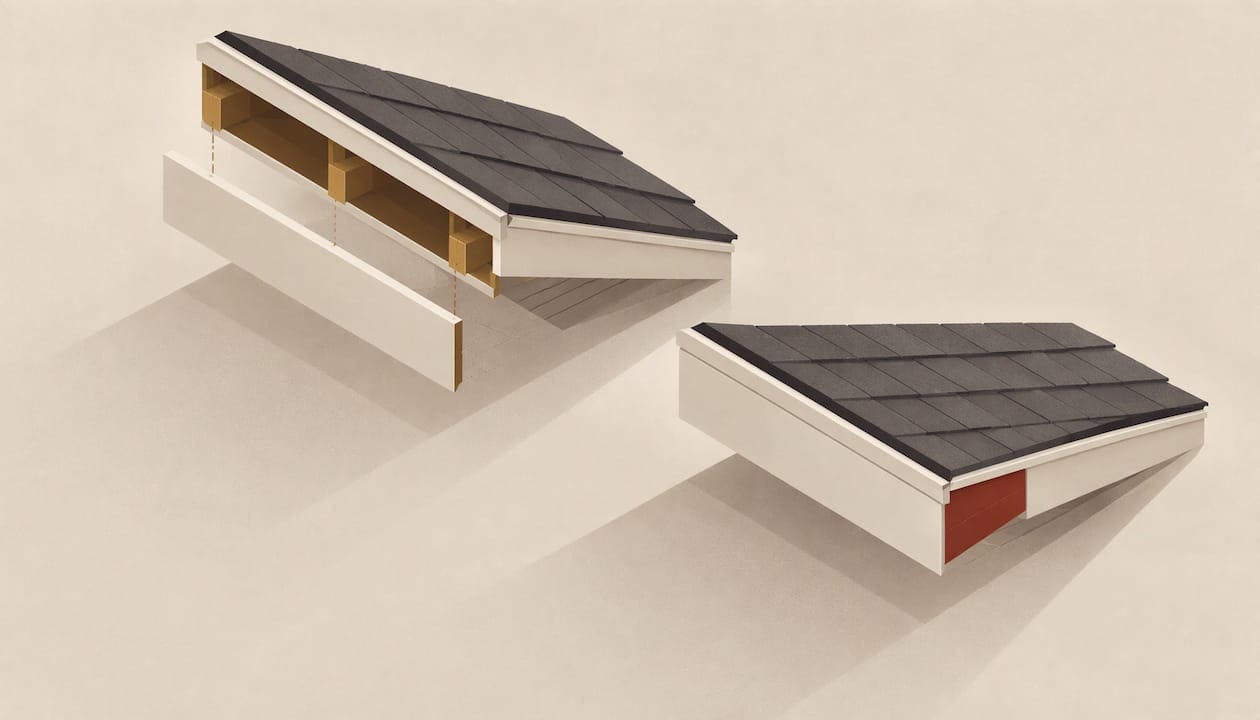
A fascia board is the long board that runs along the bottom edge of your roof, directly behind the gutter. It carries the guttering and closes the gap between the roof and the wall. Replacing it properly means taking the gutters off, checking the timber behind, fitting new boards level with the rafter ends and refitting the gutters with the right fall. Done by a roofing contractor who handles the whole roofline in one visit, it usually takes a few days and avoids paying for scaffolding twice. That is how we approach it at Yellowstone, and the rest of this guide shows you why.
TL;DR
- Replace rather than patch when boards are soft, split, warped or have pulled away from the rafter ends. Light surface damage on sound timber can often be repaired instead.
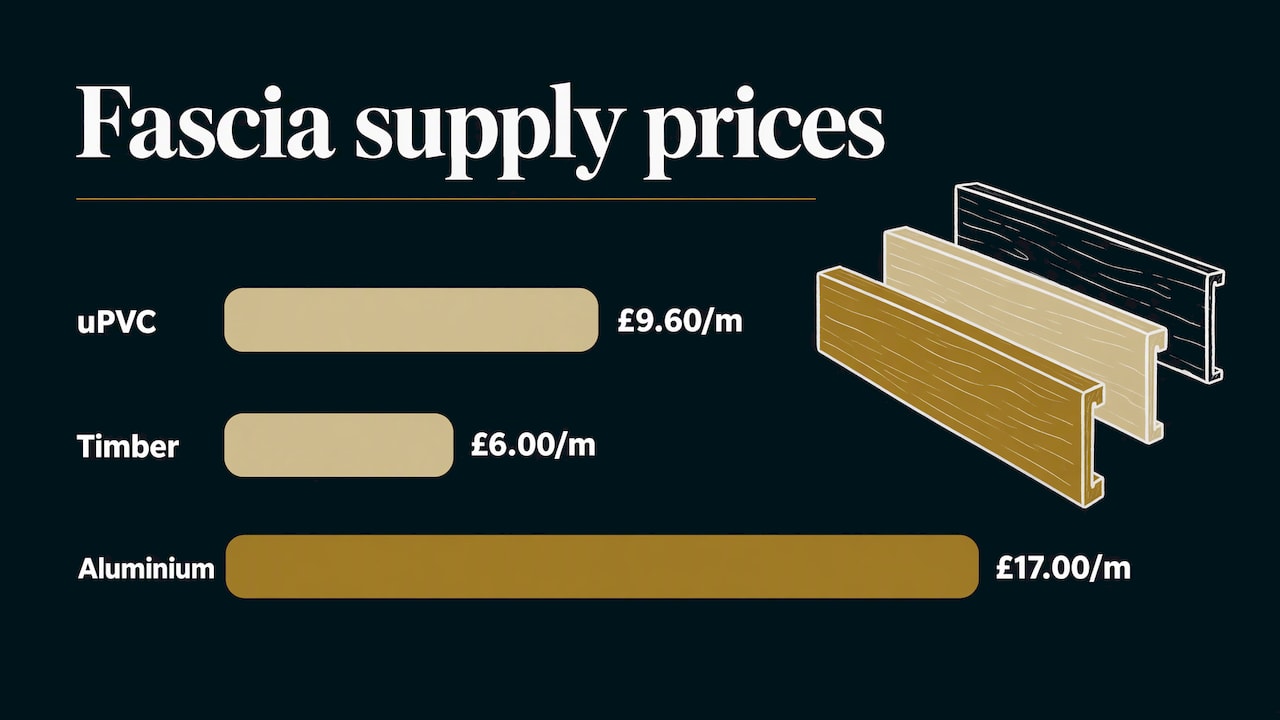
- Materials are uPVC, timber or aluminium. The Federation of Master Builders (FMB) lists fascia supply from about £9.60 per metre for uPVC, £6.00 for timber and £17.00 for aluminium.
- Most homes take between one and five days, depending on size, scaffolding and what is found under the old boards.
- Scaffolding, waste removal and hidden rot repairs move the price more than the boards do, so ask for them itemized.
- Get the fascia, soffit and gutter work quoted together so the access is paid for once.
Table of Contents
- How to tell a fascia board needs replacing
- Choosing the material
- What a proper fascia replacement involves
- How long it takes
- What drives the cost
- Reading a quote before you sign
- How long fascias last
- Our view
- Fascia replacement with Yellowstone
- FAQ
- Sources
How to tell a fascia board needs replacing
You can check most of this from the garden, ideally after rain.
- Soft or crumbling timber. If a screwdriver tip sinks into a timber fascia, it has rotted. Paint will not fix that.
- Peeling paint and dark patches. Paint that bubbles or flakes in the same spot every year usually means water is getting in behind it.
- Splits, gaps and warping. Boards that bow or open at the joints let water reach the rafter ends. Old or low-grade plastic can also yellow, crack or sag.
- Gutters that sag or overflow. Because the gutter is screwed into the fascia, a weak board lets it droop, and then water spills down the wall.
- Stains inside. Damp marks on bedroom ceilings near an outside wall, or a musty loft, can point to a roofline problem.
If the damage is limited to a short run, repair may be enough. Our guide to when to fix a fascia and when to replace it walks through that decision. If you are also seeing problems underneath the boards, the soffit repair guide covers the signs to look for.
Choosing the material
The three common choices behave very differently over the years. Figures below are the supply prices the FMB published in January 2026, excluding fitting.
| Material | Fascia supply price | What to know |
|---|---|---|
| uPVC | From about £9.60 per metre | The lowest-cost option that needs no repainting |
| Timber | About £6.00 per metre | Mid-range to fit, but it needs regular painting or staining |
| Aluminium | About £17.00 per metre | The highest price and the most durable |
Soffits, the boards that close the underside of the overhang, start from around £13.50 per metre for uPVC on the same FMB price list. Because the two boards sit together and meet at the same corners, most homeowners replace them as a pair.
For most houses, uPVC is the sensible default: it is clean, quick to fit and does not need repainting. Timber suits period homes where the look matters and you are happy to keep it painted. Aluminium is for those who want the longest life from the roofline and are happy to pay for it.
What a proper fascia replacement involves
The quality of the finished job is decided by the steps you never see. This is the sequence a careful contractor follows.
- Access. Scaffolding goes up so the team can work safely along the whole eaves. Working from ladders is slower, less safe and rarely gives a straight finish.
- Gutters off. In most cases fascias cannot be replaced properly without removing the gutters, because the guttering is fixed straight into the board. Taking it off gives full access, secure fixing and correct alignment, and lets the gutters go back with the right fall so they do not leak later.
- Old boards out. The old fascia and, where included, the soffit are removed to expose the rafter ends and the wall plate.
- Timber check and repair. This is the step that separates a lasting job from a cosmetic one. New boards should never be fixed over damp, soft or decayed wood. Any rotten rafter ends need cutting back and repairing with treated timber first.
- Measure, cut and fit. Boards are cut to length, joined with proper trims and fixed through into each rafter with corrosion-resistant fixings. Plastic expands and contracts with temperature, so it needs room to move at joints.
- Ventilation. Soffits usually carry the vents that let air flow through the roof space. Whatever is fitted must keep that air path open, otherwise moisture builds up in the loft and insulation works less well.
- Gutters back on and tested. The gutters and downpipes are refitted with a fall towards the outlet and checked with water.
- Clear-up. Old boards, offcuts and fixings are removed from site.
Two things go wrong most often. One is new boards fixed straight over rotten timber, which look fine for a year and then start to fail. The other is blocked eaves ventilation after the soffits are changed. Both are about care at the unglamorous stages rather than the materials. On our jobs, this is where thorough project management earns its keep: one team coordinating the scaffold, the carpentry and the guttering, rather than three trades arriving in turn.
How long it takes
The FMB says most soffit and fascia replacements finish within a few days. As a guide:
- Terraced house: usually 1 to 2 days
- Semi-detached house: around 2 to 3 days
- Detached house: 3 to 5 days
Time goes up when the gutters are being replaced at the same time, when the scaffold is more complicated, or when rot is found behind the old boards (FMB timings). Bad weather can also delay a job, because boards and sealants should not be fitted in the wet.
What drives the cost
The boards are often the smaller part of the bill. What changes the total is:
- Length of roofline. More metres of fascia, soffit and guttering means more materials and more time.
- Material. See the table above.
- Scaffolding. The FMB puts daily hire at around £200 for one side of a bungalow, rising to as much as £2,600 for four sides of a two-storey detached house. A taller or more awkward house costs more to access.
- Road or pavement licence. If the scaffold stands on a public footway, the local council’s licence typically costs around £200 per 28-day period.
- Waste. An average skip or tipping charge runs from £180 to £300.
- Hidden repairs. Rotten rafter ends or leaks that only show once the boards are off.
All of those figures come from the FMB guide, and they show why a single “per metre” price tells you very little. The same house can be quoted very differently depending on how much of this is included. Because scaffolding is the biggest single add-on, having the guttering, fascia and soffit done together means you pay for the access once. Our gutter replacement price guide covers the guttering side in more detail.
Reading a quote before you sign
The consumer advice charity Citizens Advice recommends getting at least three written quotes and comparing them like for like. For a fascia job, that means checking:
- A fixed total price with a breakdown of labor and materials, with the VAT position stated and how long the price stays valid.
- What is included. Scaffolding, waste removal, gutters, downpipes, soffits and any bargeboards at the gable ends should each be named, not lumped into one line.
- What happens if rot is found. A good quote says how concealed repairs will be priced, so a surprise is not an open-ended extra.
- Insurance. Confirm the contractor carries public liability insurance, since you will have people working at height on your home.
- A written contract covering start and finish dates, delays, materials, any subcontractors, payment arrangements and tidying up.
- Guarantee terms in writing: how long it lasts, what it covers, whether it can be passed on if you sell, and whether it is insurance-backed.
A quote that is clear on scaffolding, waste and insurance lines is a sign of a well-run business. Tradespeople use tools such as quotes and invoices for roofers to show those costs separately, and you should expect the same transparency whoever you hire.
We provide free written estimates, and our work is fully guaranteed with extensive warranties, so the paperwork you receive from us covers the points above in writing.
How long fascias last
Lifespan depends on the material, the quality of the board and, above all, whether water has been kept out. Timber lasts as long as its paint and the roofline stay sound, so it needs regular maintenance. Plastic and aluminium need little more than an occasional wash and a check that gutters are not overflowing onto them. Rather than replacing on a calendar, replace when the signs above appear. A yearly look from the ground, plus clearing gutters of leaves, catches most problems early.
Our view
Most fascia problems we are called to started as a gutter problem. A blocked or leaking gutter soaks the board for years until the timber behind it gives way. So we never treat the board in isolation.
When we replace fascias, we look at the whole roofline: soffits, guttering, downpipes and the roof edge itself. The reason is practical. The scaffold is the expensive part of the job, and every time it goes up it costs you money. One visit, one team and one set of guarantees is cheaper and tidier than separate trades.
We also think the unseen work is what you are really buying: checking the rafter ends, fixing into sound timber, keeping the eaves ventilated and refitting the gutters to fall properly. That is why we back our work with a full guarantee and manage each project from start to finish, so you are not chasing three different people.
Ask any contractor what they do when they find rot behind the board. A clear answer before work starts is worth more than a low price per metre.
Trey
Fascia replacement with Yellowstone
We replace fascias, soffits and guttering for homeowners and commercial property managers, with fully guaranteed work, extensive warranties and thorough project management from the first visit to the clear-up. If you want the roofline looked at as a whole, see our fascias, soffits and guttering service and ask for a free written estimate.

We work across Wiltshire, Worcestershire, Chester, Newport, Cardiff and Swindon, with local pages for towns including Swindon, Cardiff and Newport. If water is already getting in, our roof repairs service can deal with leaks while the roofline is addressed.
FAQ
Can I replace just one fascia board?
Yes, if the rest is sound and the replacement matches in profile and color. The catch is that the gutter on that run still has to come off. For uPVC, a visible color difference between old and new boards is common, which is why many people replace the whole elevation at once.
Do I need to replace the soffits at the same time?
Not always, but it is usually sensible. The two boards sit together and are fitted from the same access, so replacing both avoids paying for scaffolding again later. If your soffits carry vents, make sure the new ones keep the roof space ventilated.
Does fascia replacement need planning permission or a building regulations sign-off?
Like-for-like replacement of fascias on a house does not normally need planning permission, though listed buildings and conservation areas can have their own rules, so check with your local council first. Keeping the eaves ventilation intact is a building regulations matter, and a competent contractor will account for it.
Can the work be done in winter?
Often yes, in dry spells. Wet or very cold days can hold things up because boards and sealants need suitable conditions, so allow for some weather flexibility in the schedule.
Sources
- Soffits and fascia replacement costs, Federation of Master Builders
- Before you get work done on your home, Citizens Advice